Kaiser's 13.4M Tracking-Pixel Breach: When Your Own Website Quietly Hands PHI to Advertisers
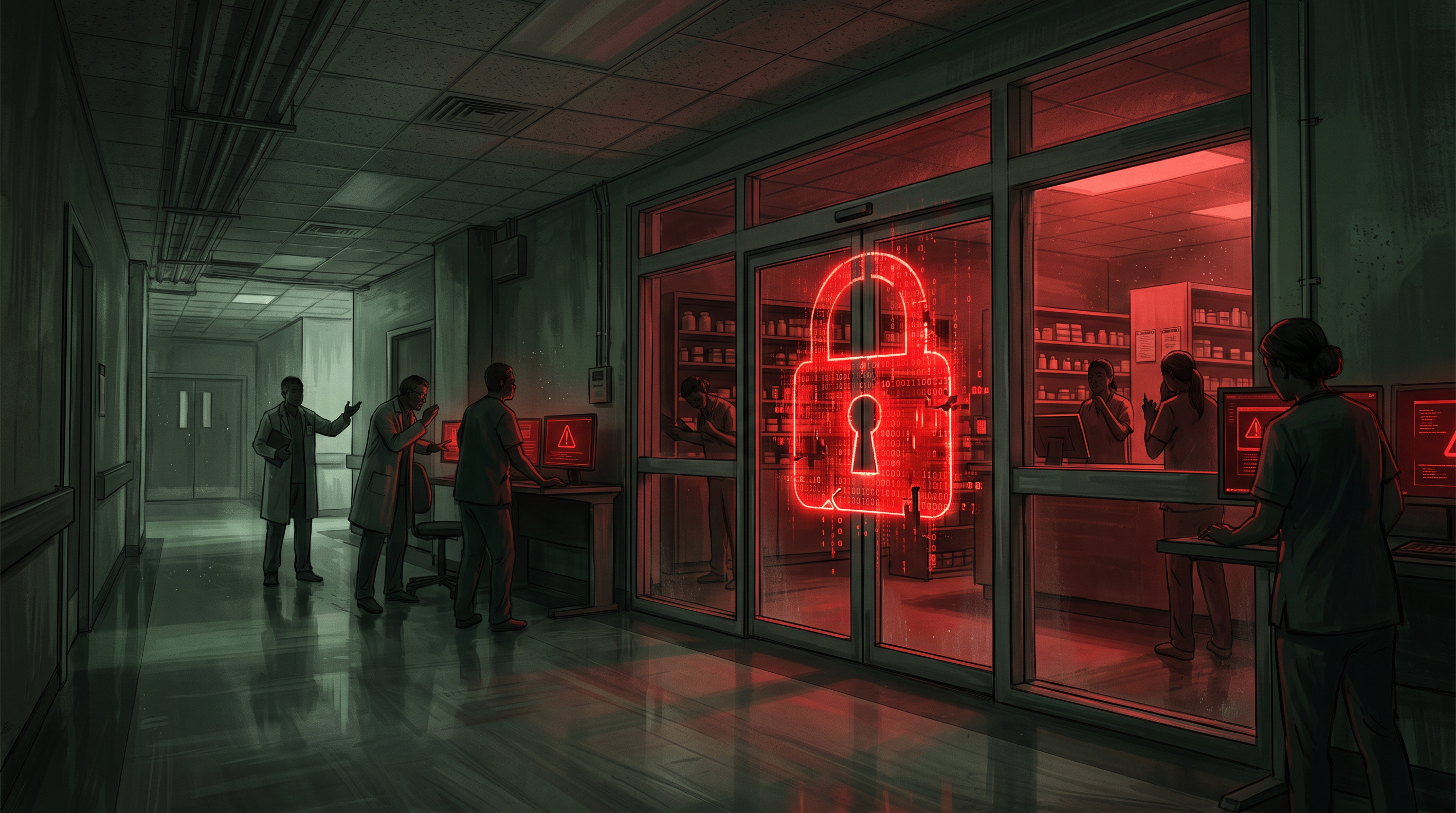
In May 2024, Kaiser Permanente disclosed that tracking pixels on its sites and apps had silently shared 13.4M members' engagement data with Google, Microsoft, and X. No ransomware. No broken firewall. Just trusted third-party code doing exactly what it was built to do.
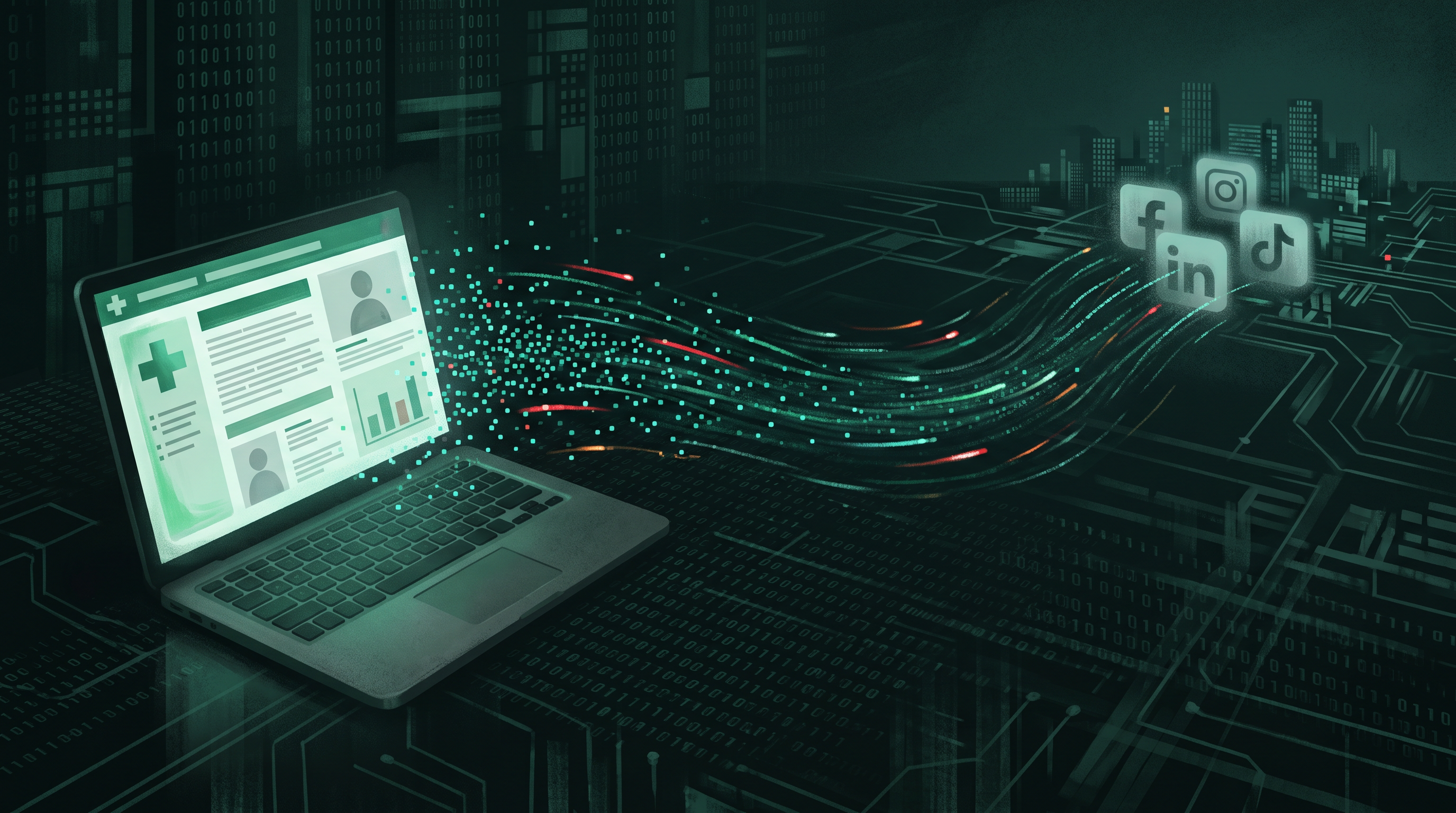
In May 2024, Kaiser Permanente began notifying roughly 13.4 million current and former members that their personal information may have been disclosed to third-party advertisers — Google, Microsoft, and X (formerly Twitter) — through tracking technologies embedded in Kaiser's own websites and mobile apps. There was no ransomware note, no stolen password, and no perimeter to rebuild. The data left Kaiser's environment through code that Kaiser had deliberately placed on its own pages, doing precisely what that code was designed to do: report user behavior to advertising platforms.
This is the breach that should unsettle every insurance agency owner, because it doesn't fit the ransomware mental model most of the industry is still operating under. The attackers didn't have to defeat a firewall. They didn't have to phish a credential. The PHI walked out the front door, one page-view at a time, through a snippet of trusted third-party JavaScript that somebody in marketing had pasted into a template to measure conversion.
What Actually Happened
Tracking pixels — small pieces of code from analytics and advertising platforms — are standard across the web. When a member logged into Kaiser's member portal, searched for a provider, or browsed a condition page, those pixels transmitted information about the visit to the third-party ad platforms. Kaiser's disclosure indicated that the shared data could include names, IP addresses, and details about how a member interacted with the sites and apps — information that, in combination, constitutes protected health information under HIPAA, because it reveals that an identifiable individual was engaging with a health plan's services.
Kaiser removed the tracking codes, reported the event to the U.S. Department of Health and Human Services Office for Civil Rights, and began the notification process. The scale — 13.4 million individuals — placed it among the largest health-data disclosures of the year. The regulator's concern, echoed in HHS OCR's 2022 and 2024 bulletins on tracking technologies, was straightforward: when a covered entity embeds third-party tracking that transmits identifiable user data to advertisers, that transmission is a disclosure of PHI, and HIPAA's rules apply to it exactly as they apply to any other disclosure.
Why This Is a Zero-Trust Failure, Not a Malware Story
The Kaiser incident is the clearest illustration of why zero-trust architecture — not a taller firewall — is the control that actually matters in 2026. The traditional security model treats the network as a castle: hard on the outside, trusting on the inside. Once a request is inside the perimeter, it's assumed to be legitimate. Tracking pixels break that assumption entirely, because the "inside" of the application is voluntarily shipping data to a third party the application was told to trust.
A zero-trust model inverts the assumption. No component — internal or third-party — is trusted by default. Every data egress is evaluated, logged, and denied unless explicitly permitted. Under a zero-trust design, a tracking pixel that attempts to transmit identifiable member engagement data to an external advertising endpoint is blocked at the application layer, flagged in the audit log, and reviewed before it is ever allowed to fire. Defense-grade security is not a marketing label for Kaffeine; it is the architecture that prevents exactly this class of silent exfiltration.
The Insurance-Agency Parallel Most Owners Miss
You are not Kaiser. You don't run a member portal serving 13 million people. But your insurance CRM almost certainly embeds the same category of third-party code: a chat widget, a session-recording tool, an analytics SDK, a marketing-pixel for your lead-capture landing pages, a calendar-booking embed. Each one is a snippet of JavaScript that runs inside the same browser context that your producers use to view client PHI.
When a producer opens a client record and the page also loads a third-party analytics script, that script can observe the DOM — the page structure, the text, the form fields. If the record contains a name, a date of birth, a health-condition note, or a policy detail, that data is reachable by the third-party code running on the same page. You don't need a breach; you need an embed. And the notification obligation, under HIPAA and the NAIC Data Security Model Law, attaches to your agency the moment identifiable data reaches the third party.
This is the exposure most agency owners never audit, because it doesn't look like a breach. It looks like a marketing tag.
What Military-Grade Security Actually Prevents Here
The controls that would have contained the Kaiser disclosure are the same controls Kaffeine was architected around — and they are not the controls most CRMs advertise:
- PHI tokenization. Identifiers are replaced with tokens at ingestion so that even if a third-party script observes a value, what it sees is a non-reversible token, not the underlying health data. Cleartext PHI never lives in the application layer the script can reach.
- Encryption at rest with per-tenant keys. A separate AES-256 KMS key per tenant means a compromise of one organization's exposure surface can't be generalized to another's — the blast radius is bounded by design.
- Row-Level Security at the database layer. No query — including one initiated by a compromised or over-permissioned component — can cross tenant or agent boundaries. A tracking pixel that somehow reached the data layer still can't see beyond the records it's entitled to.
- Audit logging with anomaly detection. Egress of engagement data to an unapproved external endpoint is logged in a tamper-proof, six-step chain and flagged as anomalous bulk export in real time — the difference between detecting a problem in hours and discovering it months later during a routine audit.
- Deny-by-default egress. The DoD STIG-influenced configuration denies third-party network calls from the application context unless the endpoint is explicitly allow-listed. A new tracking pixel doesn't get to phone home because nobody approved its destination.
None of these are retrofits. They are the architecture. A platform that bolted them on after a breach is a platform that already had the breach.
The Notification Math Nobody Budgets For
Kaiser's disclosure reached 13.4 million people. Your agency's disclosure may reach far fewer, but the per-record cost structure is brutal at any scale. Breach notification under HIPAA requires individual written notice, a conspicuous posting, and in large-scale events, media notice — all within 60 days of discovery, with potential state-law overlays that compress the window further. HHS OCR has the authority to impose civil monetary penalties reaching tens of thousands of dollars per violation, per year, with caps exceeding $2 million for identical provisions across a calendar year. The NAIC Data Security Model Law layers a separate 72-hour commissioner-notification obligation on top.
A single misconfigured tracking pixel across a marketing landing page and your client portal can, in principle, produce a notification obligation to every client whose record was viewed in the window the pixel was active. The cost is not the pixel. The cost is the mailings, the call center, the legal review, the regulator response, and the producer attrition that follows when your agents conclude their book of business isn't safe on your platform.
The Takeaway
Kaiser's breach is the case study that should reframe how insurance agencies think about security in 2026, because it proves the threat isn't always a ransomware gang in another country. Sometimes the threat is a trusted snippet of code doing its job inside your own application. The only architecture that survives that threat is one that trusts nothing by default, tokenizes the PHI it can't avoid holding, logs every egress, and denies third-party data flows until they are explicitly reviewed. That is what military-grade security means in practice — and it is the standard Kaffeine was built to meet, so your agency never has to send the letter Kaiser had to send.
— G. David Humphries, Kaffeine Security